
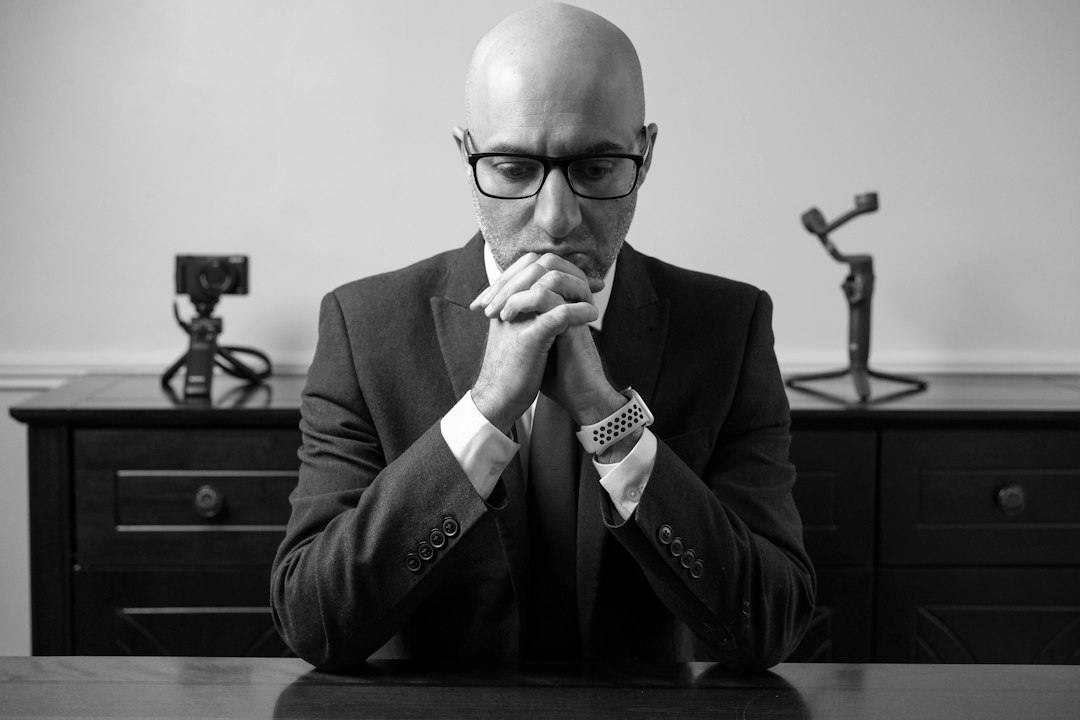
Interview anxiety isn’t a nerves problem. It’s a prep problem wearing a nerves costume.
The fastest way to shut down interview anxiety is to shrink what you don’t know. You don’t know what they’ll ask, you don’t know what you’ll say, and you don’t know whether you’ll blank. Each of those has a fix you can build in the 48 hours before the call, and none of them involve a breathing app. I’ve coached hundreds of mid-career tech professionals through interviews, and the anxious ones are almost never underqualified. They’re under-prepared in one specific way: they’re trying to hold the whole interview in their head.
Why interview anxiety isn’t a mindset problem
When a client tells me they freeze in interviews, I don’t run a mindset session. I’ve been on both sides of the interview table for 20+ years and I still feel it before a big call, so I’m not going to pretend a pep talk fixes it. Instead, we go build something.
Here’s the thing: your brain is anxious because it’s doing two jobs at once. It’s trying to remember your material and perform your material at the same time. That’s the same reason people ramble, and it’s why smart people freeze in technical interviews they could pass in their sleep. Working memory is small. An interview asks you to recall a story, structure it, read the interviewer, and manage your face, all in the same ten seconds.
The research backs this up. In a Personnel Psychology study of real job applicants, McCarthy and Goffin measured five kinds of interview anxiety. The only one interviewers could actually see was communication anxiety, the worry about whether the words will come out. And the anxiety an interviewer could see tracked closely with lower ratings of the interview. In other words, they don’t dock you for feeling nervous. They dock you for sounding like you don’t know your own story.
So the fix isn’t calm. The fix is knowing your story cold, so there’s nothing left to retrieve under pressure.
Fix 1: Build the one-page story sheet
Most candidates prep by reading about the company and rehearsing answers in their head. Then the first behavioral question lands and they go fishing. That fishing is the anxiety.
Instead, put your material on paper before the interview:
- Four or five core stories, one line each: the problem, the three actions you took, the result. That’s it. You don’t need twenty single-use stories, and you can read why in Interview Stories: Build Five, Not Twenty.
- Under each story, the three signposts you’ll flag out loud: “There were three things I did here. First… second… third…” Their notes are their long-term memory of you, so give them three things to write down.
- Your two purpose-built answers: weakness and failure. Those are the only two questions a core story won’t cover.
Keep the sheet in front of you on a video call. Bring it into an in-person interview too. Glancing at a page while you say “let me think about which example fits best” reads as prepared, not weak. As a result, when the question comes, you’re choosing a story, not inventing one. That single shift removes most of the panic before it starts.
Fix 2: Switch from defense to offense
Here’s what I hear from anxious clients right before a mock: “I just don’t want to ramble. I don’t want to trip up. I don’t want to say the wrong thing.”
That’s defense. Every one of those goals is about not losing. Defense produces stiff, hedged, over-careful answers, and the interviewer hears the hedge as doubt.
The offense version uses the exact same script. The question in your head changes from “how do I not screw this up” to “which three points do I need to land.” Same words, completely different delivery. You aren’t tracking your mistakes anymore. You’re tracking your signposts.
One rule makes this work: confidence beats accuracy. If a number is fuzzy, round it. If a date is approximate, say it cleanly. The interviewer isn’t fact-checking your bio in the first three minutes. They’re deciding whether they want to spend the next thirty with you. A story that’s 80% precise and fully confident beats one that’s 100% precise and full of “I think” and “around.”
This is also why rehearsed answers cost you the offer. Memorizing word for word is defense too. You’re guarding a script instead of landing points, so when the interviewer phrases the question differently, the script breaks and the nerves flood back in.
Fix 3: Own the first 30 seconds
Interview anxiety peaks before the first real question. So take the first question yourself.
In the small-talk window, before they say “so, tell me about yourself,” ask them something: “Before we start, how’s the search going on your end?” or “What made this role open up?” It costs nothing, it turns an evaluation into a conversation, and you’ve now spoken a full sentence out loud without any stakes attached. The first sentence is always the hardest. Make it one you chose.
Then use the reappraisal move from Harvard’s Alison Wood Brooks. Her study on pre-performance anxiety found that people who told themselves “I’m excited” before a stressful task performed better than people who tried to calm down. Anxiety and excitement run on the same physical arousal, so don’t fight it. Point it somewhere. “I’m excited to walk them through the migration story” works. “Stay calm” doesn’t, because your body already knows you aren’t.
What to do when you blank anyway
It’ll still happen sometimes, and the recovery is a skill you can rehearse. Don’t bulldoze through a fumbled sentence. Name it and reset: “You know what, I’m not framing this the way I want to. Give me a second.” Take twenty seconds, breathe so your brain gets oxygen, and re-answer cleanly. Composure on a visible miss reads as senior. I break down the whole sequence in How to Recover From a Bad Interview Answer in 30 Seconds.
You can also fix it later. At the end of the interview: “I’ve been thinking about the metrics question, and I want to reframe my answer.” Interviewers remember the recovery more than the stumble.
Interview anxiety FAQ
How do I calm interview nerves fast? Stop trying to calm them. Put your four or five stories on one page, ask the interviewer a question before they ask you one, and say “I’m excited” instead of “stay calm.” Preparation shrinks the unknown; the nerves shrink with it.
Is it normal to have interview anxiety even with lots of experience? Yes. Experience makes you good at the job, not at talking about the job under evaluation. Senior people have more material to sort through and no system for choosing, and that’s what triggers the freeze.
Does interview anxiety mean I’m not ready for the role? No. It means your material isn’t organized for retrieval yet. Anxious candidates I coach are almost always qualified. They’re holding everything in working memory instead of on paper.
What should I do the night before an interview? Finish the one-page story sheet, say each story out loud once with the three signposts, and stop. More rehearsal past that point makes you sound memorized, not prepared.
What to do next
If you want to know what a stalled search is actually costing you, run the job search cost assessment. Ninety seconds, and it gives you a monthly dollar figure plus the stage of your search that’s leaking the most.
If freezing under pressure is the part you want to fix first, read Technical Interview Preparation: Why Smart People Freeze next. It covers the retrieval problem in the round where it costs the most.
If you’d rather have someone run a mock with you, score it, and tell you exactly which story to fix first, book a free strategy call.