

Knockout Questions Are Not “ATS Magic” – They’re Requirements. Here’s How to Stop Getting Burned.
You customize your resume. You tweak your LinkedIn. You hit submit.
Then you get rejected so fast you wonder if the system even loaded your file.
If that’s been happening, here’s the uncomfortable-but-useful truth:
Most “instant rejections” aren’t about your resume. They’re about your answers to knockout questions.
 This post will help you:
-
spot knockout questions before they spot you
-
answer honestly without underselling yourself
-
stop spending energy on roles that were never possible
(Yes, that last one stings. Also yes, it saves you weeks.)
The real reason you got “auto-rejected” (it wasn’t your resume)
A lot of job seekers blame an “evil ATS.”
But plenty of systems reject candidates because of a single non-negotiable response, like:
-
needing visa sponsorship when the company can’t sponsor
-
wanting fully remote when the role is onsite
-
lacking a required license, certification, or clearance
That’s not an algorithm judging your potential. That’s a company confirming constraints.
Not fun. Not personal. Still real.
Knockout questions are job requirements wearing a trench coat
Knockout questions are the fastest gate in the process.
They exist because:
-
companies get a lot of applicants
-
recruiters have limited time
-
some requirements are truly mandatory
Think of them as the bouncer asking, “Are you on the list?”
If you’re not, arguing about it doesn’t get you in. It just makes the line longer.
The 60-second pre-check before you apply
Before you invest 30 minutes filling out an application, do this quick scan.
The non-negotiables scan
Look for these in the job post:
-
work authorization / sponsorship language
-
location requirements (onsite, hybrid, specific region)
-
travel expectations
-
required certifications or licenses
-
clearance requirements
-
minimum years of experience (and whether it’s truly required or “preferred”)
If you see a hard mismatch, decide quickly:
-
Walk away, or
-
Only proceed if you have a realistic workaround (example: you already have authorization, or you can relocate and the role supports it).
The “if yes, prove it” scan
If you plan to answer “Yes” to a must-have, make sure your resume can back it up.
Example:
-
If you say you have 5+ years in product management, your experience section should make that obvious.
-
If you rate yourself a 4/5 in a tool, you should be able to describe how you used it, not just that you’ve heard of it.
This is where a lot of people get dinged later – not by the form, but by the recruiter call.
The common knockout categories (and what to do about each)
Work authorization and visa sponsorship
If a company can’t sponsor, saying “No” when you actually need sponsorship doesn’t get you hired. It just delays the rejection until a human finds out.
Better strategy:
-
answer truthfully
-
prioritize employers and regions that sponsor
-
lean harder into networking where context can be shared early
This is one of those “logistics beat talent” moments, and I hate that for you.
Location, remote, relocation
If a role is onsite and you need remote, that’s a mismatch unless:
-
the posting says hybrid is possible and you can meet the requirements
-
you’re willing to relocate within their timeline
-
you have a direct conversation (usually via networking) confirming flexibility
Translation: don’t assume. Confirm.
Licenses, certifications, clearances
If the role requires a specific credential, you either have it or you don’t.
If you’re in progress, some companies will consider you – but only if the job post hints at flexibility.
A smart move:
-
if you’re actively pursuing it, note it clearly (example: “Certification X – in progress, expected Month Year”)
Years of experience and tool proficiency
This one is tricky because the questions often force you into a rigid answer.
If you’re close:
-
don’t exaggerate
-
use your resume bullets to demonstrate equivalent scope and outcomes
Because recruiters don’t hire “years.” They hire evidence of doing the work.
How to answer without self-sabotage
Yes/no questions
Rule: answer honestly, but don’t assume the harshest interpretation.
Examples:
-
“Do you have experience with Salesforce?”
-
If you used it regularly: yes.
-
If you opened it once in 2019: no.
-
If the question is vague, treat it like a recruiter would:
-
“Can this person do the job with reasonable ramp time?”
Rating scales (1 to 5)
These are confidence traps.
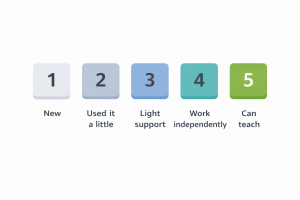
Use a consistent rubric:
-
5 = I can teach it
-
4 = I work independently
-
3 = I can do it with light support
-
2 = I’ve used it a little
-
1 = I’m new
Then match your resume and interview stories to your rating.
The “Truth + Strategy” playbook
This is how you stop getting blindsided.
When you should walk away
Walk away when the mismatch is truly non-negotiable:
-
sponsorship required and employer doesn’t sponsor
-
role is onsite and you cannot be onsite
-
required license is mandatory and you don’t have it
It’s not quitting. It’s choosing higher-probability bets.
When a referral can help
Referrals help when the requirement isn’t a true hard stop.
A referral can:
-
get your application seen faster
-
add context to your background
-
increase trust early
But it won’t rewrite company policy. If the role cannot sponsor visas, a referral won’t magically unlock sponsorship.
How to build a referral ask that doesn’t feel gross
A good referral ask is specific and low-pressure:
-
why you’re reaching out
-
why the role fits
-
what you’re asking for (insight or referral)
-
an easy “no” option

Templates you can copy
Referral message template
Subject: Quick question about your team at [Company]
Hi [Name] – I’m exploring [role type] roles and saw [Job Title] on your team.
From what I can tell, it aligns with my background in [1-2 relevant areas].
Would you be open to a 10-minute chat so I can sanity-check fit (and ask a couple questions about how your team works)?
If it’s a strong match, I’d love to apply in a way that doesn’t get lost in the pile.
No worries if timing is bad – totally understand.
Recruiter follow-up template (after applying)
Subject: Application – [Job Title] – quick context
Hi [Recruiter Name] – I applied for [Job Title] today.
Quick context: I’ve done [relevant work] and delivered [specific outcome], which maps closely to [key requirement].
If helpful, I’m happy to share a 1-minute overview of my background or answer any knockout-type requirements upfront.
Thanks for your time,
[Your Name]
Checklist: your knockout-question survival kit
Before you click submit:
-
I scanned the job post for non-negotiables (authorization, location, credentials)
-
My answers match reality (no “hopeful fiction”)
-
If I answer “Yes,” my resume shows proof
-
I used a consistent rating rubric (not vibes)
-
I invested in one networking action for this role (message, warm intro, comment, etc.)
-
If it’s a hard mismatch, I walked away fast
FAQ: what people get wrong (constantly)
“Should I ever lie to get past knockout questions?”
No. It usually just delays the rejection until a recruiter screens you. Worse, it can create trust issues later.
“But I’m close. I have 3 years and they want 5.”
Then your goal is to show scope, outcomes, and comparable responsibility – while keeping your answers honest.
“What if I need sponsorship?”
Focus your energy where sponsorship is possible and use networking to surface those paths faster. Applying blindly can become a churn machine.
“Can a referral override knockout questions?”
Sometimes it helps with soft requirements. It does not override true hard stops.
Want fewer rejections and more interviews?
If your applications feel like a slot machine, we can help you make them predictable.
At Career Vision Coaching, we build:
-
a resume that proves fit quickly
-
a role targeting strategy that avoids unwinnable filters
-
a networking approach that creates momentum (without feeling fake)
If you want support, we can help you determine the best next step based on your goals – even if that step is “stop applying to this category of roles for now.”

Not sure what your search is costing you? Run the 90-second job search cost assessment. You get a monthly dollar figure and the one stage of your search that’s costing you the most.