
I’ve reviewed hundreds of LinkedIn profiles over the years. Some are strong. Most are… fine. And “fine” is the problem.
A fine LinkedIn profile doesn’t get you found. It doesn’t make recruiters stop scrolling. It sits there, technically complete, doing absolutely nothing for you.
The worst part? Most of the mistakes I see take less than 30 minutes to fix. People just don’t know they’re making them.
Here are the ones I see constantly – and what to do about each one.
Your Headline Is a Job Title and Nothing Else
This is the single most wasted piece of real estate on LinkedIn.
Your headline shows up every time you comment on a post, appear in search results, or send a connection request. It’s doing more work than almost any other part of your profile. And most people fill it with something like “Product Manager at Acme Corp.”
That tells me what you do. It doesn’t tell me why I should care.
A better approach: lead with your target role, then add context that makes you memorable. Instead of “Software Engineer,” try “Software Engineer | Building Scalable Cloud Infrastructure.” Instead of “Product Manager,” try “Product Manager | B2B SaaS | Growth & Retention.”
You get 220 characters. Use them. And if you’re currently searching, don’t put “Actively Looking” in your headline. Use LinkedIn’s Open to Work feature instead and keep your headline focused on what you actually do.
You’re Invisible to Recruiters – And Don’t Know It
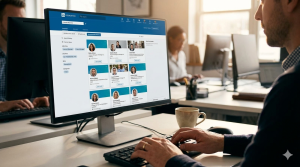
Here’s something most people don’t realize: recruiters search LinkedIn the way you search Google. They type in keywords – skills, titles, tools – and LinkedIn serves up the profiles that match.
If those keywords aren’t on your profile, you don’t exist to them.
This means two things. First, your Skills section matters more than you think. LinkedIn’s own data says 44% of companies use skills filters when searching for candidates. If you haven’t updated your skills list to match the roles you’re targeting, fix that today.
Second, your About section and Experience descriptions need to contain the language your target employers actually use. Not buzzwords. Not “leveraging synergies.” The real terms from real job descriptions in your space. Read five postings for your target role and notice the words that keep showing up. Those words belong on your profile.
One more thing: LinkedIn has a profile completeness system. Users who hit “All-Star” status are significantly more likely to show up in search results. The bar isn’t high – you need a photo, headline, summary, experience, education, skills, and at least 50 connections. If you’re missing any of those, you’re handicapping yourself for no reason.
Your Profile Photo Is Working Against You
I shouldn’t have to say this, but I still see it all the time: no photo, a group photo cropped awkwardly, a selfie from a wedding, or a picture from 2014 that no longer looks like you.
LinkedIn’s own data shows that profiles with photos get up to 21x more views and 9x more connection requests. That’s not a rounding error. That’s the difference between being seen and being invisible.
You don’t need a professional photographer (though it helps). You need a recent, well-lit headshot where you’re looking at the camera and your face is clearly visible. No sunglasses. No hats. No distracting backgrounds. This is a professional platform – your photo should match.
While you’re at it, replace the default gray LinkedIn banner with something intentional. A cityscape, a relevant image, something with your brand colors – anything that shows you put in more than zero effort.
Nobody’s Vouching for You
Recommendations on LinkedIn are underrated. Most people skip them entirely, which is a missed opportunity.
Think about it from a hiring manager’s perspective. They’re looking at your profile, reading your summary, and trying to figure out if you’re the real deal. A recommendation from a former manager or colleague that speaks to your specific strengths is social proof that you can actually do what you claim.
Three solid recommendations is the minimum I’d suggest. Reach out to former managers, team leads, or cross-functional partners who saw your work up close. Don’t be weird about it – a simple message works: “I’m updating my LinkedIn and would really appreciate a recommendation. If you’re open to it, I’d be happy to return the favor.”
Most people will say yes. They’re just waiting to be asked. (And if you’re not sure what story your profile should tell, fixing your resume first can make the whole thing easier.)
Your URL Still Has Random Numbers in It
Small thing. Takes 30 seconds. Matters more than you’d think.
Your default LinkedIn URL looks something like /in/josh-bob-47a3b8/. That’s what shows up on your resume, in your email signature, and when you share your profile anywhere.
Customizing it to something clean – like /in/joshbob – makes you look polished and intentional. It’s a tiny detail, but tiny details add up.
Go to your profile settings and change it now. Then update it everywhere else you’ve shared the old one.
Your Profile Is a Time Capsule
If your LinkedIn still lists a job you left two years ago as your current role, that’s a problem. If your skills section hasn’t been updated since you created your account, that’s a problem. If your About section references goals you hit in 2021, that’s a problem.
An outdated profile tells recruiters and hiring managers one of two things: you’re not serious about your career, or you’re not paying attention to details. Neither is a good look.
Set a calendar reminder to review your profile quarterly. Update your current role description, rotate in new skills, refresh your summary to reflect where you’re headed now – not where you were a year ago.
You Built a Profile and Stopped There
Here’s the thing nobody wants to hear: having a great profile is necessary but not sufficient.
LinkedIn is a platform, not a billboard. If you set up your profile and then disappear, you’re missing 80% of the value. The people who get the most out of LinkedIn are the ones who show up consistently – commenting on posts, sharing insights, engaging with their network.
You don’t need to post every day. You don’t need to become a LinkedIn influencer. But you do need to be visible. A few thoughtful comments per week on posts in your industry will put your profile in front of more people than any amount of keyword optimization.
And here’s a networking tip that most people overlook: engage on posts that have high reach but fewer than 100 comments. Your comment is much more likely to be seen there than on a viral post with 500 replies.
The goal isn’t to collect connections. It’s to be recognized by the right people so that when a role opens up, your name comes to mind.

Where to Start
If this list feels overwhelming, don’t try to fix everything at once. Here’s what I’d prioritize:
First, update your headline and photo. Those two things are visible in every interaction on the platform.
Second, audit your Skills section and About summary for the keywords your target roles actually use.
Third, ask for two or three recommendations from people who’ve worked closely with you.
That alone will put you ahead of most profiles I review. The rest you can knock out over a long weekend.
Your LinkedIn profile is a sales document, whether you think of it that way or not. It’s selling the idea that you’re worth a conversation. Make sure it’s doing its job.
And once your profile starts doing its job and interviews come in, you’ll want to be ready for the salary expectations question – because that’s where most people leave money on the table.
Not sure what your search is costing you? Run the 90-second job search cost assessment. You get a monthly dollar figure and the one stage of your search that’s costing you the most.